
Mosquito
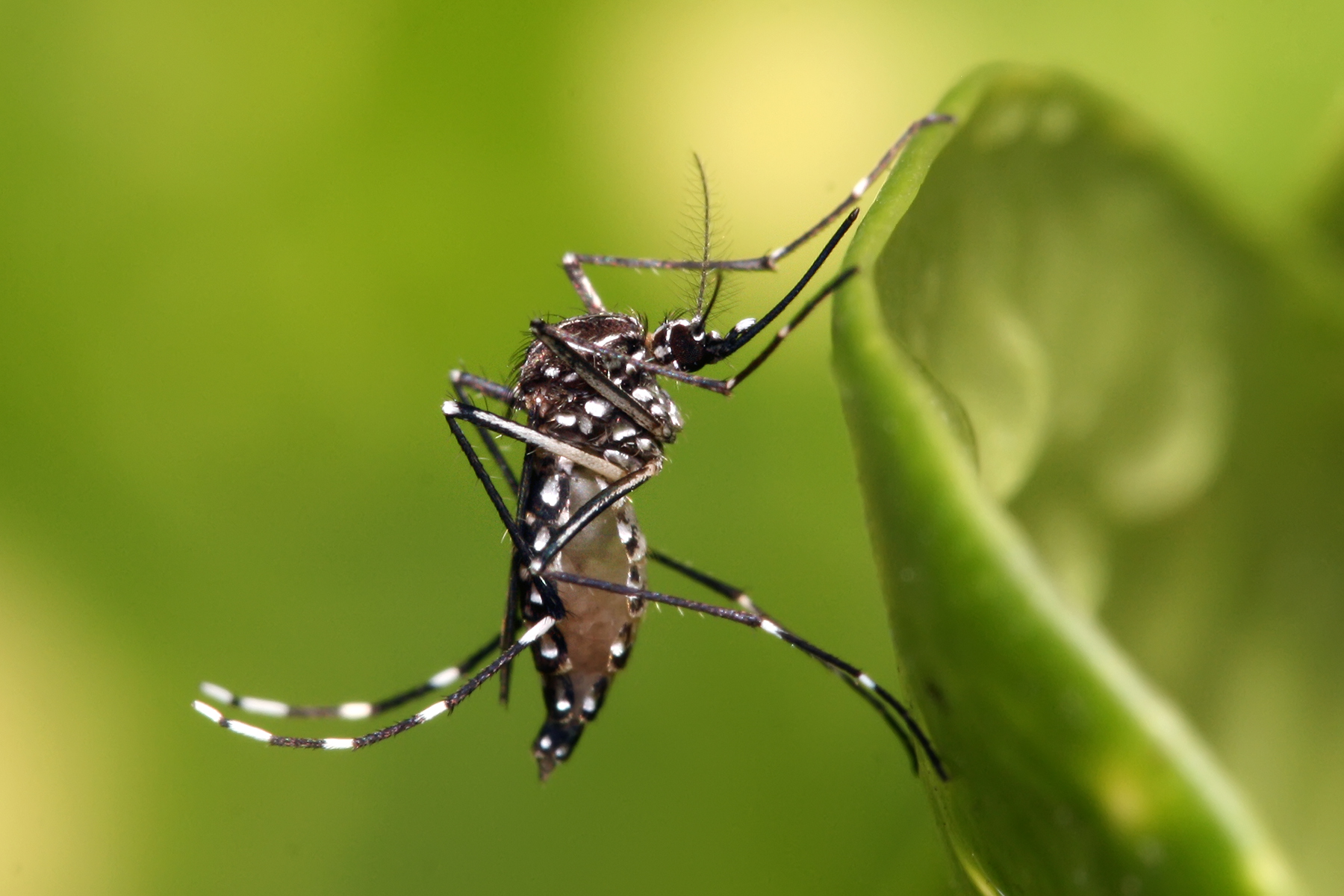
Mosquitoes, the Culicidae, are a family of small flies consisting of 3,600 species. The word mosquito (formed by mosca and diminutive -ito) is Spanish and Portuguese for little fly. Mosquitoes have a slender segmented body, one pair of wings, three pairs of long hair-like legs, and specialized, highly elongated, piercing-sucking mouthparts. All mosquitoes drink nectar from flowers; females of many species have adapted to also drink blood. The group diversified during the Cretaceous period. Evolutionary biologists view mosquitoes as micropredators, small animals that parasitise larger ones by drinking their blood without immediately killing them. Medical parasitologists instead view mosquitoes as vectors of disease, carrying protozoan parasites or bacterial or viral pathogens from one host to another. The mosquito life cycle consists of four stages: egg, larva, pupa, and adult. Eggs are laid on the water surface; they hatch into motile larvae that feed on aquatic algae and organic mater
Elevation: 2578 m
Country: Chile
Explore topics:
- Mosquito hiking routes
- Mosquito best routes
- Mosquito camping
- Mosquito parking
- Mosquito car park
- Mosquito difficulty
- Mosquito family friendly
- Mosquito dog friendly
- Mosquito sunrise hike
- Mosquito sunset hike
Related mountains in Chile
- 9 de Julio
- Agua Negra
- Agua Salada Norte
- Aguja Nacimiento
- Aguja de los Columpios del Diablo
- Alancay
- Alaya
- Alfil
- Algarrobo
- Altar del Pissis