
The Parthenon
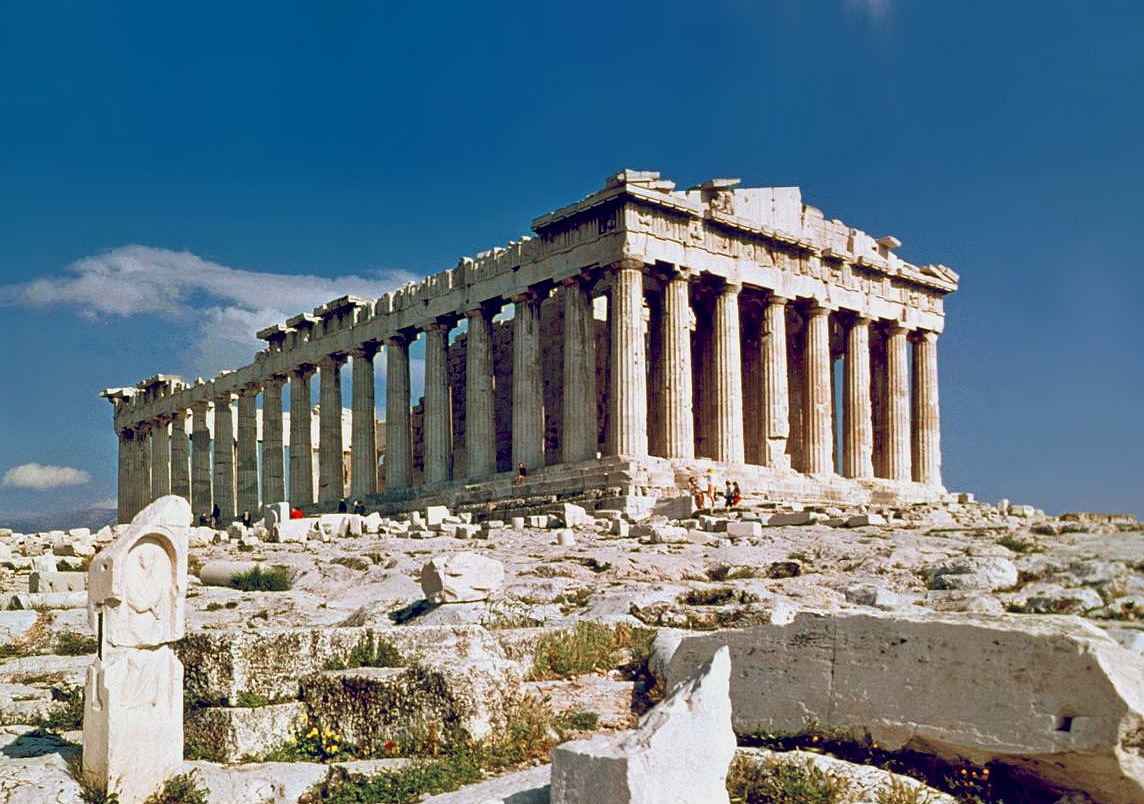
The Parthenon (; Ancient Greek: Παρθενών, romanized: Parthenōn [par.tʰe.nɔ̌ːn]; Greek: Παρθενώνας, romanized: Parthenónas [parθeˈnonas]) is a former temple on the Athenian Acropolis, Greece, that was dedicated to the goddess Athena. Its decorative sculptures are considered some of the high points of classical Greek art, and the Parthenon is considered an enduring symbol of ancient Greece, Western civilization, and democracy. The Parthenon was built in the 5th century BC in thanksgiving for the Greek victory over the Persian invaders during the Greco-Persian Wars. Like most Greek temples, the Parthenon also served as the city treasury. Construction started in 447 BC when the Delian League was at the peak of its power. It was completed in 438 BC; work on the artwork and decorations continued until 432 BC. For a time, it served as the treasury of the Delian League, which later became the Athenian Empire. In the final decade of the 6th century AD, the Parthenon was converted into a Christ
Elevation: 1260 m
Country: Australia
Explore topics:
- The Parthenon hiking routes
- The Parthenon best routes
- The Parthenon camping
- The Parthenon parking
- The Parthenon car park
- The Parthenon difficulty
- The Parthenon family friendly
- The Parthenon dog friendly
- The Parthenon sunrise hike
- The Parthenon sunset hike
Related mountains in Australia
- Abbott Peak
- Abbotts Lookout
- Abel Peak
- Aberfoyle Sugarloaf
- Abrotanella Rise
- Adams Peak
- Adamsons Peak
- Addicumbene
- Adla Hill
- Airmid Dome